

One might argue that the scale of the universe is such that our minds will never be able to comprehend it. In fact, it seems quite likely that even things here on earth far exceed what our minds could ever imagine in their prime. This is one reason why people refer to the flood as being equivalent to 100 Olympic-sized swimming pools or the distance traveled by something equal to six football fields. These are all simply ways to make something difficult to understand a little more comprehensible. And when it comes to the incredible power and energy that nature can wield, it's simply mind-blowing.
10. Mount St. Helens released 24 megatons of thermal energy

North America is prone to frequent hurricanes and tornadoes, as well as earthquakes. While these are rare, there are also a number of volcanoes that erupt from time to time, such as Mount St. Helens in Washington state. When it erupted in 1980, it terrifyingly demonstrated its remarkable power.
Beginning in March of that year, a series of earthquakes were recorded in the area, and the volcano itself began to bulge outward by 450 feet. When it finally erupted on May 18, it released 24 megatons of thermal energy, equivalent to 24 million tons of TNT. It ejected 520 million tons of ash and destroyed enough trees to build 300,000 homes with the initial lateral blast alone.
9. Converting 1 kg of hydrogen into helium releases as much energy as burning 20,000 tons of coal.

The sun is always engaged in a fusion reaction that converts hydrogen into helium, producing light and heat and keeping us all alive. Fusion is a hellish way to produce energy, and we all hope that one day someone will master it here on Earth, because it will make life so much easier. But until then, we have to make do with things like nuclear fission, solar energy, and burning good old fossil fuels.
The difference between how nuclear fusion works and how coal burns is so absurd that it seems contrived when you try to compare them on the same scale. By this, we mean the difference in the energy produced when the Sun converts one kilogram of hydrogen into helium and how much coal we need to burn here on Earth to produce the same amount of energy.
The reaction of one kilogram of hydrogen turning into helium releases 630 trillion joules, or as much as you would get from burning 20,000 tons of coal.
Over its lifetime, the Sun consumes 1.95 x 1029 kg of hydrogen. In one second, the Sun produces 3.9 x 1026 watts of energy. For comparison, in one second, the Sun produces more energy than the entire planet would consume in several hundred thousand years.
8. The energy of a hurricane is 200 times greater than the total electricity generating capacity of the entire world.
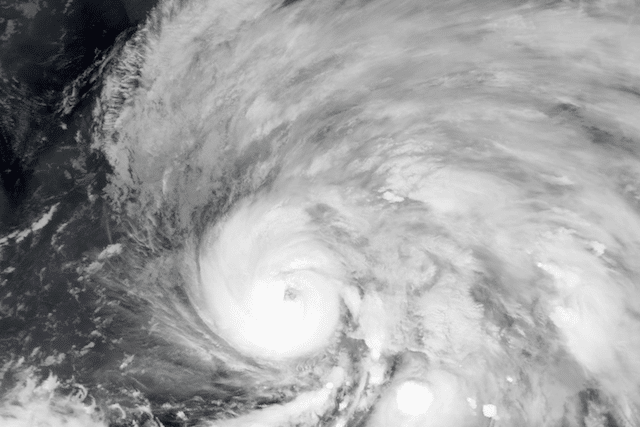
Hurricanes are perhaps the most terrifying force of nature any of us have ever witnessed. It's hard to believe the destructive potential of a hurricane, and we've all seen evidence of the devastation they can wreak. But what is the force behind this terrifying force? The scale is enormous and really puts things into perspective.
From its birth through its cycle of destruction to its final demise, a hurricane will release as much energy as 10,000 nuclear weapons. In other words, all this energy, including cloud and rain formation, is roughly 200 times greater than the total electricity generated on the entire planet. That's just one hurricane. We average about six storms a year, with several others that don't quite reach hurricane status.
7. Krakatoa exploded with the force of 10,000 atomic bombs.
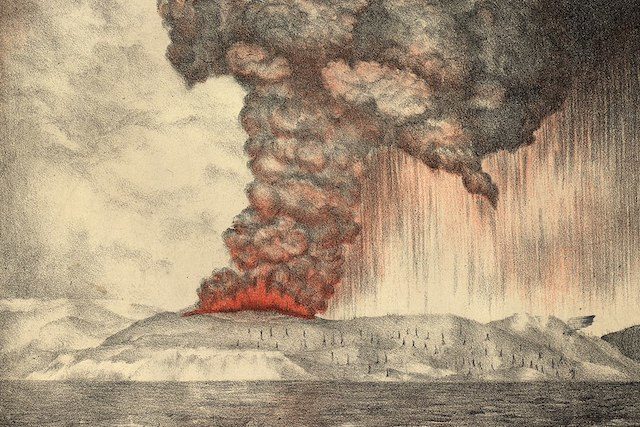
In 1883, a volcano on the island of Krakatoa erupted, producing the loudest sound in the history of the world. It is estimated to have reached 310 decibels, so loud that it orbited the planet four times. The sound was 172 decibels at a distance of 100 miles. A jet engine would hit you with 150 decibels if you were standing next to it.
When it erupted, it exploded with the force of 200 megatons of TNT—10,000 times more powerful than the bomb dropped on Hiroshima. It is believed that more than 36,000 people were killed.
6. 1 kg of uranium-235 produces 3 million times more heat than 1 kg of coal.
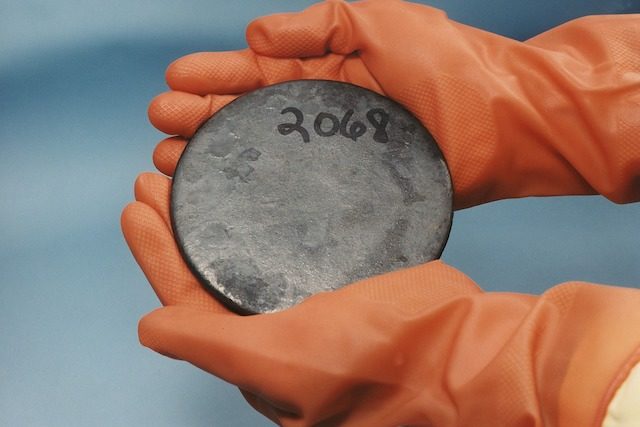
People have long debated the advantages of nuclear energy over something like traditional coal combustion. Nuclear energy is fraught with dangers, including the risk of meltdowns and the problem of nuclear waste. Coal combustion pollutes the environment and, as we'll see in a moment, is horribly inefficient in comparison.
If you had one kilogram of uranium-235, you could produce 24,000,000 kWh of heat. For comparison, the same weight of coal would produce 8 kWh. Thus, uranium has approximately three million times more energy than the same amount of coal. One uranium fuel pellet is equivalent to one ton of coal.
5. Tsunamis can produce enough energy to power large cities or even entire countries for several days.

Over the past few decades, there have been several devastating tsunamis. In 2011, Japan was hit by a tsunamis with an energy of three petajoules. This was enough to power New York City for a week. But even this pales in comparison to what happened just seven years ago.
In 2004, an undersea earthquake triggered a tsunami in the Indian Ocean the day after Christmas. The tsunami's power was estimated to be equivalent to 0.8 gigatons of TNT. In practical terms, that's as much energy as the entire United States would use in 11 days, or 3.35 exajoules. What's an exajoule? It's one quintillion joules.
One calorie of food produces 4,184 joules of energy. A Big Mac contains 550 calories. This means a Big Mac is equivalent to 2,301,200 joules. Divided into exajoules, the tsunami produced the energy equivalent of just under 1.46 trillion of them. That's a lot of Big Macs.
4. Climate change adds energy equivalent to the explosion of thousands of nuclear warheads per day.
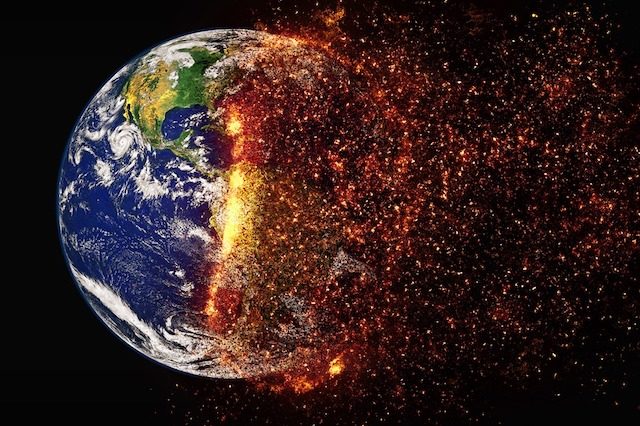
These days, everyone knows about climate change, and most people who still want to debate it take a "human versus nature" approach. That is, even critics agree that the Earth is getting warmer; they just disagree on why. But if we all acknowledge that the Earth is warming, then how much energy is the Earth absorbing to achieve this?
Heat is energy, so the energy required to warm the entire planet is no small feat. Scientists studying global temperature trends have attempted to put this into perspective in a rather dramatic way.
Between 2005 and 2019, scientists compared the Earth's energy imbalance. This compares the amount of energy we absorb with how much we can emit. The imbalance doubled during this time, and the amount of additional energy absorbed by the Earth is equivalent to four Hiroshima explosions occurring every second. This is actually slightly better than the 2012 estimate by NASA climate scientists, which estimated the equivalent of 400,000 Hiroshimas per day, but not by much.
3. A magnitude 9 earthquake releases 90 times more energy than the one in the United States.
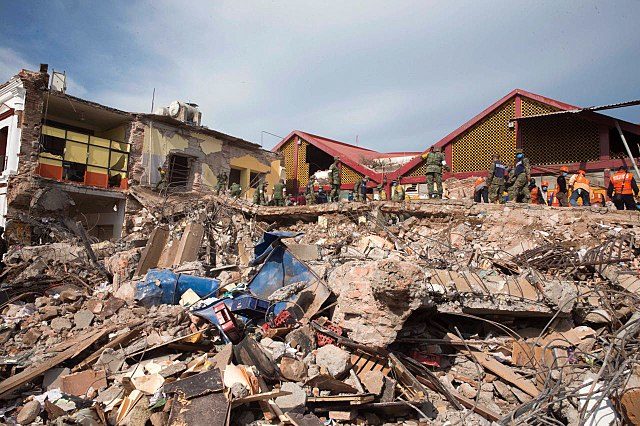
Like any natural disaster, an earthquake deals a serious blow. The seismic intensity of an earthquake is usually measured using the Richter scale, but saying that an earthquake measures a 4 on this scale isn't really that significant. Fortunately, we can make some equivalences.
If an earthquake really registered a 4.0 on the Richter scale, you'd consider it quite weak, more or less. However, it releases energy equivalent to 1 kiloton of TNT. Sounds like a lot, right? That's about 1,162 megawatt-hours (MWh), or energy. If the average US household uses 10,715 kWh per year, then a magnitude 4.0 earthquake could power 108 US homes for a year. But that's just a moderate earthquake. Let's up the scale to a major earthquake.
A magnitude 9.0 earthquake is rare. It's a major earthquake, and they happen every few years, if not decades. According to the US Geological Survey, they would release energy equivalent to 32,000 megatons of TNT. That's 1,338,880,000,000 gigajoules. Convert that to MwH, and you get 371,911,111,111.11. The US produces 4,095,487,406 MWh of electricity. So, a magnitude 9.0 earthquake would generate 90 times the annual US electricity production capacity.
2. The meteor that killed the dinosaurs was more powerful than the world's nuclear arsenal.

We go about our daily lives, knowing somewhere in the back of our minds that a meteor could hit Earth and wipe us all out in a matter of moments. It's unlikely, or something like that, but it's happened before, so it could definitely happen again someday. And that means the meteor would have to be pretty powerful when it lands. We can look at recent ones to get an idea of how powerful they could be.
In 2013, a meteorite lit up the sky. The 11,000-ton rock hurtled through the air at 42,000 miles per hour, creating a shock wave that destroyed 4,000 buildings. It released energy 30 times greater than the Hiroshima bomb. Powerful stuff. But as you may have noticed, the world didn't end.
If we go back in time, the most famous meteor in history is the one commonly associated with the extinction of the dinosaurs. That meteor was clearly more powerful than Chelyabinsk, and the scale of its power was astounding.
Researchers have calculated that the power of this particular explosion was equal to 10 billion bombs dropped during World War II. Enough to incinerate life thousands of miles away and blanket the Earth in a cloud that would have wiped out all life.
1. A supernova produces more energy than you can imagine.
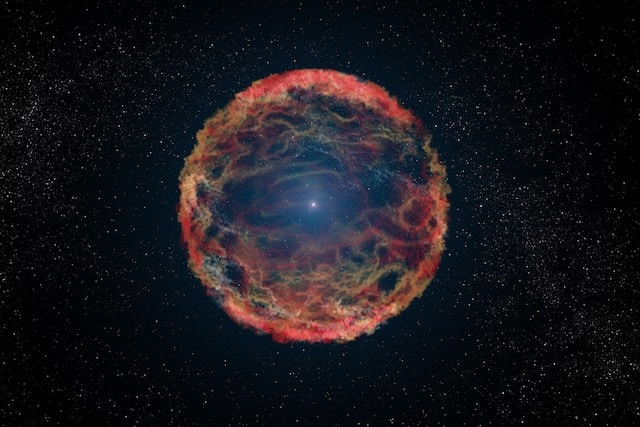
Let's leave Earth for a moment, because no matter how powerful nature may be, the universe as a whole puts our tiny blue dot to shame. Let's travel into the vastness of the great beyond, to a star thrashing in its death throes. A supernova.
As far as we know, this is the biggest explosion that can exist. And they can get big. So big that our attempts to make it sound understandable are, frankly, laughable so far. But at least it will offer some perspective.
The energy released during a supernova explosion can be around 1044 J. Thus, this single event will release as much energy as the exploding star released over the previous 10 billion years of its existence. Imagine our sun burning as hot and bright as it has for 10 billion years. We've already discussed how, every second, it produces all the energy that Earth could use for hundreds of thousands of years. All of this energy was released again and again during supernova explosions over the course of 10 billion years.
It's still incredibly crazy and difficult to comprehend, so we can break it down further. In 2015, scientists observed one particular supernova. The dying star, named ASSASN-15lh, was 580 billion times brighter than our Sun. It produced an explosion a billion trillion times more powerful than the Tsar Bomba, the largest nuclear weapon ever tested. It was 30 times brighter than the entire Milky Way galaxy, which contains 100 billion stars.