

Curses are as old as history, and some fervently believe in their power to create evil circumstances. The Bible, both the Old and New Testaments, is filled with them. Even Jesus of Nazareth pronounced a curse when he saw a fig tree that, to his disappointment, bore no figs. His curse ensured that no one would ever again eat from that tree.
Curses continue to affect people of all cultures, and there are as many ways to protect ourselves from them as there are curses themselves. But some of them are nothing more than nonsense. Here are ten that have long been believed and quoted, although upon closer examination, they have little basis in fact.
10. The Curse of Tutankhamun

The Curse of Tutankhamun, like the previous «Curse of the Pharaohs» or «Curse of the Mummy,» was largely a creation of a competitive media eager to sell newspapers. When Howard Carter's expedition discovered Tutankhamun's tomb in 1922, it caused a media frenzy. When Carter entered the tomb in late November, accompanied by George Herbert, Lord Carnarvon, who had financed the expedition, the frenzy reached its peak. Ultimately, more than 5,900 artifacts were recovered from the tomb. They found no document or other item describing the curse promising an early death to anyone who desecrated the tomb, although later events led the press to report that they had.
The following spring, Lord Carnarvon cut himself while shaving, reportedly from a mosquito bite that had already become infected. On April 5, 1923, Lord Carnarvon died of sepsis caused by the infected wound, and although he had been ill for over two decades, the media seized on the Curse of Tutankhamun. Several other deaths among excavators followed, but according to the British Medical Journal The Lancet , their frequency did not exceed the norm for a population sample of similar size. Howard Carter lived another 16 years and died at the age of 64 of natural causes.
The Curse of Tutankhamun is based on and expanded on tales of curses imposed by ancient people to protect their final resting places and the objects they took with them on their journey to another world. Following excavations, Tutankhamun's mummy and many objects recovered from his tomb traveled around the world. Each time the artifacts reach a new destination, the media faithfully reproduce the legend of Tutankhamun's curse, thrilling their audiences with threats of doom. But there is little evidence to support the curse's existence, and even less evidence that Carter and his team found a written record of the curse.
9. The Curse of Tippecanoe
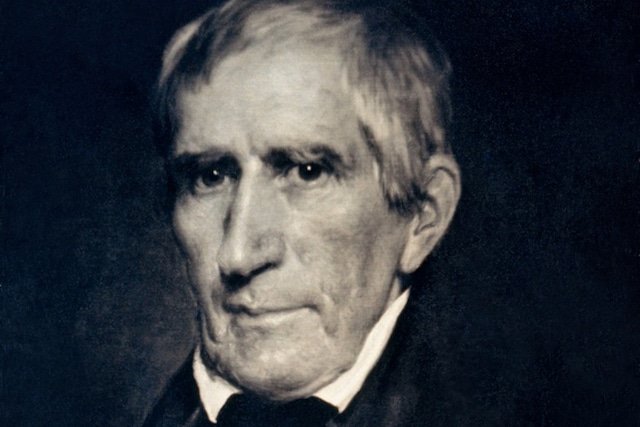
Tippecanoe refers to William Henry Harrison, the American general who led the forces that defeated Tecumseh's forces at the Battle of Tippecanoe in 1811, temporarily ending the power of Tecumseh's Confederacy. According to legend, Tecumseh's brother, Tenskwatawa, was to blame for the Indian's defeat and, in response, cast a curse on the presidency, though it would be another 29 years before Harrison was elected president. Others argue that the Shawnee leader had nothing to do with the supposed curse on the American presidency. It became known as the Curse of Tippecanoe because, in 1840, the year it began, Harrison, a hero of Tippecanoe, was elected president.
According to a curse, every American president elected to office in a year ending in zero will not live to see their full term. Harrison was the first American president to die in office, in 1841. The next president elected to a fixed term, Abraham Lincoln, died in office but after being inaugurated for a second term in 1865. In 1880, James Garfield was elected but was assassinated in his first term. In 1900, the same thing happened to William McKinley. In 1920, Warren Harding was elected but died of heart problems during his first term. In 1940, Roosevelt was elected (his third term), and although he died in office, it was his fourth term, serving 12 years and one month as president.
The last time the «curse» arose was in 1960, when John F. Kennedy was assassinated in his third year in office. Since then, it has spared Ronald Reagan (1980), George W. Bush (2000), and, as of this writing, Joe Biden (2020). The curse is mentioned in the media every 20 years or so, but frankly, it has little impact beyond its entertainment value. More interestingly, the Curse of Tippecanoe is a strange quirk of American history.
8. The Curse of Rosemary's Baby

For the uninitiated «Rosemary's Baby» is a 1968 American psychological thriller film directed by Roman Polanski. It stars Mia Farrow as a woman who suspects her neighbors are members of a Satanic cult and covets her unborn child for use in rituals. Polanski initially wanted his then-fiancée, Sharon Tate, to play the lead, but ultimately decided that at that stage of her career, she didn't have the star power to carry the film. However, Tate became a victim of the so-called curse that afflicted the film and some of its actors and staff, at least according to some.
Proponents of the curse include the famous Dakota building in New York City, which was used in filming, and the site of John Lennon's murder 12 years later. Tate was murdered by the Manson family, and Polanski fled to France and emigrated after being held for 42 days on felony drug charges and child rape. Composer Christophe Komeda, who wrote the film's soundtrack, died after falling off a cliff while intoxicated.
The film's producer, Robert Evans (who also produced The Godfather), got into trouble for cocaine trafficking and earned himself probation in exchange for posting anti-drug public service announcements. So, while bad things happened to some people involved in the film's production, it was unlikely to be supernatural, and the two main stars, Mia Farrow and John Cassavetes, appear to have escaped unscathed.
7. Macbeth's Curse

According to theatrical lore, uttering Macbeth's name or reading or quoting a line from the play in a theater where the play isn't currently being performed places a curse on the offender and everyone present. One source of the curse was Shakespeare's use of the Three Witches and their spells in the play. The curse was placed on the play because the Bard used a real spell in his script, apparently an oversight among witches and non-witches. At any rate, according to the Royal Shakespeare Company, the curse has affected the play since its first performance around 1606.
Chris Rock famously took the stage during the 2023 Oscars only to be slapped by Will Smith after Rock made comments considered derogatory toward Smith's wife. What's less well known is that just minutes earlier, Rock congratulated Denzel Washington on his performance in «The Tragedies of Macbeth, while uttering the forbidden word. So perhaps the curse led to a viral moment that stunned the audience and sparked a surge in Twitter activity.
There's really no way to break this curse, because there's nothing to disprove. Witches actually appear in Macbeth («Bubble, bubble, toil and trouble...»), and whether they're casting a real spell is known only to their fellow witches. The play has a long history of questionable, violent, and even fatal events in its many productions, including films. Perhaps the best way to break the curse is to experiment. Next time you're at the theater, simply say the name Macbeth out loud and wait for things to happen. Good luck.
6. The Curse of the Bermuda Triangle

A writer named Vincent Gaddis coined the term «Bermuda Triangle» in a 1964 article published in Argosy Magazine. Later authors picked up the mantle, describing the triangle's boundaries, modifying them when necessary to suit their thesis. By the 1970s, the triangle was the subject of paperbacks, documentaries, fiction, and other forms of entertainment, both written and filmed. The truth is, the Bermuda Triangle is no more prone to strange phenomena and disappearances than any other ocean region of similar size in the world. It simply had better publicity.
The US Coast Guard does not officially recognize the Bermuda Triangle, though this has no effect on the breathless media coverage of Coast Guard searches within the triangle when circumstances warrant it. The words «Bermuda Triangle» simply attract more attention in headlines. One of the most famous events within the triangle, the loss of US Navy Flight 19, continues to figure in triangle lore as the unexplained disappearance of highly trained Navy pilots in clear weather during a simulated bombing run. In fact, although the flight began in clear weather, by the time the pilots radioed in that they were lost, the weather had deteriorated significantly, and the Navy long attributed the loss of the flight to pilot error on the part of the flight commander.
The Bermuda Triangle is a classic example of an urban myth created by false reports, circulars, deliberate lies, and sensationalism. This is not to say that there have been no ship and aircraft losses within the region's loosely defined and flexible boundaries. Ships, boats, and planes disappear at sea in all waters around the world almost every day, and many of them go without a trace. But this has been less common in the Bermuda Triangle than anywhere else, especially given the heavy traffic in the area, much of it driven by untrained recreational boaters.
5. The Curse of King Casimir IV

Fifty years after the discovery of Tutankhamun's tomb in Egypt, another group of archaeologists and excavators planned to open the tomb of the Polish King Casimir IV. Casimir IV reigned in the 15th century, and his reign was described as «successful and peaceful,» although he achieved relatively little during his reign (1447–1492).
Following the tomb's opening, which was closely followed by the media, several excavation participants developed lung diseases. This led to media speculation about a curse, reminiscent of the media frenzy over Tutankhamun's curse half a century earlier. According to some sources, at least fifteen members of the archaeological team that entered the tomb died of mysterious, unexplained lung diseases, and the curse of King Casimir surpassed that of Tutankhamun.
It turned out that the tombs of the two kings shared a common denominator, but it wasn't a curse. At least, not a supernatural curse. It was the Aspergillus flavus fungi found in both tombs. This fungus caused a condition known as aspergillosis, especially in people with already compromised lungs or immune systems. Additional fungi were also identified that contributed to the illnesses of those who entered Casimir IV's tomb. The «curse» of Casimir IV was something unknown to science, not supernatural.
4. The Curse of Tamerlane

Soviet dictator Joseph Stalin was an admirer of the Mongol leader and warlord Tamerlane, also known as Timur. Timur was the first ruler of the Timurid dynasty in the late 14th and early 15th centuries. After his death, he was buried in a mausoleum known as Gur-e Amir in modern-day Uzbekistan. In 1941, Uzbekistan was a Soviet Socialist Republic subject to the whims of Stalin, who ordered the mausoleum opened in 1941, ostensibly to verify that it contained the bodies of Tamerlane, his sons, and other relatives. Stalin assigned this task to the renowned Soviet anthropologist Mikhail Gerasimov.
Gerasimov, in the presence of local authorities, opened the crypt containing Timur's remains on June 20, 1941, despite warnings carved into the mausoleum walls against desecrating the grave. Local authorities also warned against this. On June 22, 1941, Nazi Germany invaded the Soviet Union, taking the first steps in a war that would lead to the deaths of millions. For many, the curse of Tamerlane led to the carnage that befell the Soviet republics and the rest of Eastern Europe, as well as Germany.
Those who link the Eastern Front to Tamerlane's curse ignore the fact that the German High Command began planning the so-called Operation Barbarossa in the early summer of 1940, after the fall of France. Hitler pushed Germany to invade by the end of 1940, six months before Soviet excavators uncovered Tamerlane's tomb. So, Tamerlane's curse certainly did not cause the catastrophe that befell Eastern Europe in the summer of 1941, as many have attested over the years.
3. The Curse of Superman

Many actors have played the Man of Steel on television and in feature films. The events of two of them should give pause to others considering the role, at least those who believe in the Curse of Superman. It all starts with actor George Reeves, whose film career got off to a promising start when he appeared opposite Vivien Leigh in the opening scenes of « Gone with the Wind», playing one of the Tarleton twins. By the 1950s, Reeves had achieved success and recognition thanks to his role as Superman. However, he found himself in this role and sought escape in others. Unfortunately, his filming schedule prevented him from accepting other roles. Reeves died of a self-inflicted gunshot wound in 1959, although some question whether it was truly suicide.
The next major actor to suffer from the so-called curse was Christopher Reeve (no relation), who played Superman/Clark Kent in four films in the 1970s and 1980s. Reeve suffered a horseback riding accident in 1995, paralyzing him from the neck down and confining him to a wheelchair for the rest of his life. He died in 2004 at the age of 52. Others cited as being affected by the curse include Margot Kidder, who played Lois Lane in Christopher Reeve's films. In 2002, she told the Daily Telegraph that the curse was «made-up newspaper nonsense.» Proponents of the curse believe it goes much deeper, even affecting Superman's creators, Joe Shuster and Jerry Siegel.
Despite the urban legend surrounding the curse, it appears to have been limited to only two actors who actually portrayed the Man of Steel. Others, including Dean Cain, Henry Cavill, Brandon Routh, and Tom Welling, have so far been apparently exempt from the curse. Actors before George Reeves, including Bud Collyer, who voiced Superman on radio, and Kirk Alyn, who played him in serials in the 1940s, also escaped the curse. But Lee Quigley, who appeared as the infant who became Superman in Christopher Reeve's 1978 film, died of solvent abuse in 1991, when he was just 14.
2. The Curse of My Path

One wonders what Sinatra would have thought about one of his most popular songs being cursed, bringing death to those who dare sing it publicly. But such is the case in the Philippines, where local legend describes the Curse of My Way. According to the curse, since around 2002, performers of the song in karaoke bars (called videokes in the Philippines) have been shot, and several other violent incidents have occurred. These are often caused by off-key performances, repetitive singing, and in some cases, outright premeditation. At least one security guard shot and killed a singer after he failed to heed a warning to stop performing the song.
The exact number of murders attributed to the «My Way» curse varies depending on sources. At least one was the deliberate murder of a barangay (roughly a neighborhood chairman) who decided to sing the song at a Christmas party. While there have been cases of karaoke violence caused by other songs in other countries, the My Way Curse appears to be localized to the Philippines and has lasted for over 20 years. In the 2010s, several of the thousands of karaoke bars in the Philippines removed the song from their repertoire, but sporadic murders have continued since then.
There are several possible explanations for why Sinatra's classic, written by Paul Anka, could have become a catalyst for violence. First, there's the arrogance of the lyrics themselves, delivered as the singer stands before the «final curtain.» Sinatra's version has been called «the American anthem of self-determination.» But the curse doesn't seem to have harmed Frank, who released his own version of the song in 1969. And there's nothing mysterious or supernatural about the murders; they're mostly linked by a disgruntled listener and alcohol. The "My Way Killings" are more a social phenomenon than a curse, along with karaoke-related violence throughout much of the so-called civilized world.
1. The Conqueror's Curse

Of the approximately 220 people who worked on John Wayne's 1956 car,«Conqueror» In the Utah desert, 91 people developed some form of cancer, and of those 46, 46 died from cancer or its complications. Among them were Wayne, co-star Susan Hayward, Agnes Moorehead, Lee Van Cleef, director Dick Powell, and several others, most of them in the 1960s and early 1970s. This led to the belief that the film, in which Wayne played Temujin, better known as Genghis Khan, was cursed. Most of the film's exterior scenes were shot in Escalante, a desert area approximately 135 miles downwind from the site of the U.S. government's 1953 Operation Upshot-Knothole nuclear weapons tests.
In 1980, a University of Utah biology professor called the high cancer rates and subsequent mortality rates following the production an «epidemic.» This led to the «Conqueror's Curse,» in which those working on the film were doomed to fail. But the numbers don't add up. Statistically, the chances of developing cancer in American men are about 40.2%, and the chances of dying are about 20.5%—very close to the rates the crew suffered. Conqueror . In 1956, the odds were higher, treatment was less advanced, and many of those affected were heavy smokers, including Wayne, Hayward, and Van Cleef (a notable exception was Agnes Moorehead, a teetotaler and nonsmoker who developed fatal uterine cancer).
The deaths cemented the film's reputation, leading its producer, Howard Hughes, to buy nearly every available print, effectively banning it from distribution for years. Critics weren't particularly kind, even before the film's surrounding «The Grudge.» In 2013, The Guardian re-watched the film, leaving it largely undiscussed. Debate continues over whether radiation exposure led to the crew's illnesses and deaths. But few dispute the film's quality, which is generally considered one of John Wayne's worst films.